please, please, please,
let me, let me, let me
get what i want this time.
(apologies/salamat to morrissey. this is my prayer for d., fellow libran and damon albarn-morrissey-sting-stipe lover)
Saturday, June 07, 2008


Wednesday, June 04, 2008
i still love garcia marquez
and i'm taking back everything i may have said to the effect that i don't anymore. i have recently finished reading Vivir Para Contarla (Living to tell the tale). i got my copy four years ago, as a gift from my cousin, but I only sat down to it last week. i read it overnight only because it is such a wonderful reminder of the world we are in when we read anything by garcia marquez. besides, he might not have long to live, and might not have much to write. god forbid. simba ko.

i'll post a more thorough review next time. or i might not, unless i find a way to detach myself a little bit more from the text. i can't help it, my response was -- as it has always been, when it comes to works of his -- very personal. and it goes back to the very first time i held a garcia marquez book in my hands. i can't help but associate it with so many other important things and events that are very personal to me as well. you see, my first exposure to garcia marquez was through One Hundred Years of Solitude. i still remember very vividly the day i discovered the book. it was my first day as a resident in kalayaan residence hall in UP. feeling like a millionaire, as i had just received, for the first time ever in my entire life of sixteen years, my entire allowance for the month, i proceeded to do a little book shopping at the booksale in the UP shopping center. and there it was, included in a pile of booksale books on super sale, its cover and title pages missing, but all the other pages still intact. i thought the title, which i just read from the header, was intriguing. i read the first few pages and, there is no other way to say it except to say that, they blew me away. i had no idea who garcia marquez was, what the book was all about, but as soon as i started reading it i couldn't stop. i decided to forgo sleep, breakfast, lunch, classes the following day (as i was bound to do for many more days and years to come). i was pleasantly shocked and embarrassed to find out later that garcia marquez was who/what he was and that, in my cousin's house , there was a shelf-full of garcia marquez books. and so, of course, i read all of them that entire semester. oh, and this is the same cousin who gave me my copy of Vivir -- see, there is a connection, some kind of organic unity here, after all!
i'll post a more thorough review next time. or i might not, unless i find a way to detach myself a little bit more from the text. i can't help it, my response was -- as it has always been, when it comes to works of his -- very personal. and it goes back to the very first time i held a garcia marquez book in my hands. i can't help but associate it with so many other important things and events that are very personal to me as well. you see, my first exposure to garcia marquez was through One Hundred Years of Solitude. i still remember very vividly the day i discovered the book. it was my first day as a resident in kalayaan residence hall in UP. feeling like a millionaire, as i had just received, for the first time ever in my entire life of sixteen years, my entire allowance for the month, i proceeded to do a little book shopping at the booksale in the UP shopping center. and there it was, included in a pile of booksale books on super sale, its cover and title pages missing, but all the other pages still intact. i thought the title, which i just read from the header, was intriguing. i read the first few pages and, there is no other way to say it except to say that, they blew me away. i had no idea who garcia marquez was, what the book was all about, but as soon as i started reading it i couldn't stop. i decided to forgo sleep, breakfast, lunch, classes the following day (as i was bound to do for many more days and years to come). i was pleasantly shocked and embarrassed to find out later that garcia marquez was who/what he was and that, in my cousin's house , there was a shelf-full of garcia marquez books. and so, of course, i read all of them that entire semester. oh, and this is the same cousin who gave me my copy of Vivir -- see, there is a connection, some kind of organic unity here, after all!
Friday, May 16, 2008
Alagad daw… (or why I envy Voltaire Oyzon)
I envy Voltaire Oyzon. I think I am more than a little jealous of him. He knows of what he writes, he owns the tool which he uses to write, his imagination knows no bounds, no hesitation, no fear.
Astig hi Voltaire. Diri ko ma-imagine kun gin ano niya pagbug-os hini nga mga siday, ngan maaram ako nga diri la ini asya it iya kaya suraton. No wonder, waray magruha-duha pag-translate para ha iya an makarit nga hi Merlie Alunan, ngan an iba pa nga up-and-coming writers, Janis Salvacion, Anna Laurice Jo, ngan Harvey Fiji, ngan an iba pa nga binmulig hini nga project.
Kamakauurit ni Voltaire. Kakakarit ni Voltaire. Grabe it imagination ni Voltaire. Grabe kay tungod nga kontrolado, pero malabad.
What I mean to say is, the imagination that the poems display in this collection is grounded in the only way that poems should be grounded: they create in the reader a secure and yet disconcerting feeling of being in touch with the a strange and yet knowable reality and with very personal sentiments. And, as a reader, you cannot help but feel very honored and privileged to be granted access to this writer’s reality and feelings, because the reality, rather, the realities that he offers, are rarely seen in Philippine poetry, perhaps because most of us cannot bear or afford to take stock of some of these realitie. Voltaire, on the other hand, stares at them, and engages in them, with eyes wide open, and with heart aflame. The realities that he offers are painful and beautiful. These are the realities of love and war, of globalization and ancient history, of poverty and natural wealth, of friendships and deaths. To say that what is most admirable about this collection is the emotional potency as well as the vulnerability of the poems, is to say that we are in the presence of a writer whose maturity is well beyond his years.
Umayon ako han tanan nga mga siday dinhi hini nga collection. Pero may mga special favorites ako. An akon mga paborito an mga siday nga may “conceit”, “wit”, “humor” ngan “irony”, an mga napabuyayaw, napa-tawa, napaurit, ngan napa-uga. May mga siday dinhi nga an trajectory han ira conciseness na-remind ha akon han mga metaphysical poets. May ada liwat mga poems nga napakalas an pagka postmodern nga iba nga klase, baga hin post-postmodern— mas matarom, mas “ironic”.
Gusto ko igtampalo ha mga napaka-postmodern na mga Filipino writers an iya “An Talipsay han Gugma” (“The Love Curve”), gusto ko iparayaw ha akon mga kilala nga writers na aktibista, ngan mga post-colonial nga kritiko, an iya simple, pero halarom ngan mapait nga “Didto ha Amon”, “Tawgi” ngan “Hi Salvador Magsusundalo” (Salvador will enter the Army”). May mga paborito ako, sugad han “Kan Toytoy pag-asoy han agsob nga karantahay ha ira balay”, nga diri ko gusto i-analyze hin duro, kay nadiri ako nga maruba. Instinctive it iya ginhuhugot nga response. Pa-uga ba. Siyempre, an title poem nga “An Maupay ha Mga Waray”, pa-uga liwat. Simple, bug-os hin duro, pero amo gihap, may trajectory nga napa-expand hit iya karuyag signgon, it iya meaningfulness diri contained.
Of course, if you do not speak or read Waray, some of the crispness, and the humor and irony, inherent in the sound of the original language are sometimes lost. But the translations are more than competent. In most cases, the translated versions stand on their own. The mere fact that Merlie Alunan did the translations for many of the poems here should be another big reason to get this book.
Pero an usa nga butang nga akon gud naayunan hini nga mga siday: an iya pulitika. The poems deal with such a wide range of subjects and emotions; they are carried by the various and varying voices of their speakers, but the politics of the entire collection is very stable, very clear. I will not name it. It is not for me to name it. It is enough for me that I see it. And I know you will too, and it will change you, when you read this book.
Nakaghuna-huna gud ako hin maupay kahuman ko pagbasa hini nga collection. Feeling ko bumaltok ako. Feeling ko may naabre nga gutiay nga bintana ha kalibutan, gutiay pero multifaceted, ngan importante hin duro, it “view” nga iya ginpapakita.
Alagad daw ano hi Voltaire. Kasumo. Kalabad. Kakarit.
Monday, April 28, 2008


Monday, April 14, 2008


Wednesday, April 09, 2008
here's where i am, and here's how Bob Dylan does it
according to an article on Vanity Fair (http://www.vanityfair.com/ontheweb/blogs/daily/2008/04/dylan.html)
Mint Julep: "Put the mint leaves, powdered sugar and water in a Collins glass. Fill the glass with shaved or crushed ice and then add bourbon. Top that off with more ice. I like to garnish mine with a mint sprig. Serve it with a straw. Two or three of those and anything sounds good!"
Rum-Cola mix: "Let me give you my recipe for a rum and Coca-Cola. Take a tall glass, put some ice in it, two fingers of Bombay rum, and a bottle of Coca-Cola. Shake it up well and go drink it in the sunshine!"
ahh. sounds like my kind of summer drink alright. having such tiny fingers though, i'd do it with four instead of two fingers. and i know that sounded very wrong. but who cares? i am in taipei and i am too shy scared sino-phobic (acdg to larry) to drink alone at the bar. so i've been salivating, sort of. i don't want to touch the minibar because it's a bit sad. i mean, i know i'd be sad after, drinking alone like that. but the night is young, we'll see... walked around for about two hours. okay naman. everyone has such thin arms and such slim legs.i do believe skinny pants were invented with these people in mind. looks really nice on the women, of course not on the men. the men just look uninspired and uninspiring, generally. i've been taking very inspired pictures of the women on the streets. i could easily have been this white balding man next to me, ogling the pretty taiwanese, from the safety of US territory: starbucks, of course. i've also been taking pictures of all these colorful foodstalls, but of course i dare not try them, i'm waiting for my cousin to arrive here this weekend so i can have someone to try all of them food, and maybe get allergies, with. haaay. there indeed comes a time in one's life, when one becomes no longer the adventurous spirit one thought one was, and one starts referring to oneself in this weird manner. (my pathetic attempts to sound like the mind of the old guy next to me). seriously, i find myself thinking of how things would have been so much more interesting if i were with, say, husband weng (not only because it is nice to be with husband all day, all night, always, but also because someone can take my picture with the prett girls in the background), or jet as in our macau audit, or tatay because he carries history lesons and trivia with him wherever he goes, or derek because we'd have a grand time minding people's haircuts and hoarding little electronic gadgets, or aimee because she can pass herself off as a taiwanese girl, or dennis because he is the real foodie, or dawn because we both have an insatiable interest and indefatigable faith in bargain shopping, and nanay becasue she is so snooty, it is always a worthy challenge trying to please her... oh well. now i am getting sad. i might as well give that mini bar more serious thought.
Friday, March 28, 2008
i have finally bound
my thesis. and also myself, to everything i wrote in that manuscript. i am so exhausted. but also still a bit out there, i mean not fully here yet, not fully grounded yet. but here, i am sharing the concluding essay of that study, for joel and all the others who keep asking me about it and coming away from conversations with me still baffled about what i did, or tried to do, in my thesis.
From Narratives of Subversion to a Politics of Survival
(A Conclusion)
Every meaning-making act is a narrative. Every narrative addresses itself to a subject. Narratives facilitate and even function as accomplices in the ideological formation of the subject. The subject is ultimately the site of negotiation and disruption of elements of social economies and psychic systems. Narrative modes driven by unconscious desire – like fantasy – can function as a mode of subversion, undermining subjectifying notions and mechanisms purveyed by narratives that make use of the classic realist mode. These then are the basic premises that my study rests on. That this is a study focusing on fantasy as a narrative mode in relation to larger concepts of narrativity and subjectivity, as seen in a mix of previously studied as well as never-studied set of Philippine texts, is what provides it relevance. That this is a study making an attempt to theorize on fantasy and subjectivity as expressed across a good selection of Philippine contemporary novels and short stories in English, is its challenge.
The focus of my study is fantasy, and fantasy is such a common term, with many practical and varied uses. It is for this reason that what I have tried to do in this study is both easy and difficult. Easy because of the wide range of possibilities that the familiarity and commonness of the term lends itself to, and also difficult because the subject matter resists containment. What I have tried to do in this study is pretty simple. Among other things that I ended up doing in the course of this study: I explored the uses, definitions, and ramifications of the term Fantasy in the area of Literature, particularly Philippine Contemporary fiction in English, even as I was careful to always take into consideration the non-literary employment of the term.
Dictionary definitions of the term “fantasy” are usually divided into two categories. One is anchored on the notion of reality, which places the term “Fantasy” directly opposite to, or as an antonym of the nouns truth and realism, thus that of the imagination, as fancy, as invention, as make-believe. According to the Oxford American Dictionary (2007): Fantasy refers to “the faculty or activity of imagining things, esp. things that are impossible or improbable” and also to “the product of this faculty or activity”. It is interesting to note that, as the first set of definitions suggests, fantasy is both the “activity of imagining things” as well as “the product of this activity”. My study rests on this paradox: “fantasy” is a narrative mode which is both the activity of the unconscious as well as its product.
The second category of definitions, relate the term “fantasy” more directly to desire, particularly to that of aspirations, hopes, wishes, and dreams, as well as delusions and illusions. As in: “a fanciful mental image, typically one on which a person dwells at length or repeatedly and which reflects their conscious or unconscious wishes”. Even the early uses and the origin of the term “fantasy” also reflect this paradox. According to the Oxford American Dictionary (2007), the word’s etymology suggests a paradoxical notion of the term “fantasy” as both “imagination” which is invisible to the naked eye, but also “appearance” and “to make visible”.
Indeed, the very range of definitions and uses of the term “fantasy” already point to its being an ideal mode of questioning and of subversion. To a certain extent, this is what “Narratives of Subversion” has tried to illustrate. My study made full use of and derived, many benefits, and perhaps some bold suggestions for future literary and critical studies, from the varied and paradoxical notions, definitions and uses of the term fantasy. In order to give justice to the multiple uses and dimensions of the term, my own employment of the term “fantasy”, therefore, had to be derived from more than one discipline.
The main question that this study sought to answer was: “In what ways does fantasy, a narrative mode, operate as a mode of subversion in Philippine Contemporary Fiction in English from the 1980s to the present”. In relation to this problematique, my study also sought to answer these related questions:
1. What is the location of fantasy in relation to other narrative modes, both realist and non-realist, that are employed in Philippine contemporary fiction in English?
2. In what ways is fantasy a narrative mode driven by and constitutive of desire, operating within and as ideology?
3. In what ways does fantasy as a narrative mode make apparent/express, undermine, or subvert culturally [ideologically] dominant notions of subjectivity and representation?
Drawing heavily on the ideas of Jacques Lacan and Louis Althusser (and their many interpreters), and taking off from the theoretical suggestions of Slavoj Zizek, Neferti Xina Tadiar and Rosemary Jackson, I attempted to examine the manifestations of fantasy in two sets of texts: (1) previously studied (if not canonical) Philippine texts, and (2) very recent (“pop”) fiction of young writers. The goal of the study was to interrogate a narrative mode that is generally considered as escapist, a mode for popular, “non-literary” , therefore “not serious” fiction. What I have tried to do is to articulate the subversive qualities of the use of fantasy as a narrative mode as seen in a cross section of both “literary” (academic) and so-called pop fiction.
The most apparent features shared by the primary materials included in this study are: the use of fantasy as narrative mode and similarity in structural characteristics; structure not only in the sense of narrative structure, but also in the sense of the ideological and unconscious that frame the texts. Moreover, this study finds that the structural similarities observed in the texts are among the manifestations of the employment of a fantasy mode and are likewise derived from, or driven by, similar unconscious desires.
Cave and Shadows by Nick Joaquin approximates the structure of a “whodunit” or a detective story, where the main narrative revolves around Jack Henson’s investigation of Nenita Coogan’s mysterious death. This narrative, however, is regularly interrupted by interpolating historical narratives, just as Henson’s search for answers is constantly disrupted by meaningless or irrational images, the nature of which remain ambiguous until the novel’s end. Fantasy in Joaquin’s novel manifests then in the spaces between official/rational narratives and those unofficial, but equally persistent narratives; in the sustained ambiguities of images that interpolate their perceivers, leading to the questioning of subjectivities; and in the repetition and reversals of characters across a period of four hundred years. The novel’s open ending, and unresolved ambiguities – seen in the destruction of old structures, and Jack Henson’s “broken” state— go against conventional notions of representation and subjectivity.
Alfred Yuson’s Great Philippine Jungle Energy Café and Erwin Castillo’s The Firewalkers are both historiographic metafiction texts that manipulate and eventually discard notions of unity of time, space, and character. Fantasy manifests in these texts primarily in their refusal to observe such realist conventions. They feature instead “spatio-plural” (mutiple) narratives, and fragmented and dismembered subjectivities. Moreover, these strategies are employed in order to counter univocal representation of history, revealing instead how, through the rendering of the locals as Other, and characterizing them as perennially “lacking”, the desire of the foreign elements in the community are revealed.
Dean Francis Alfar’s Salamanca attempts to ‘dislocate the narrative form’ through the employment of circularity rather than linearity, the ‘presentation of impossibilities’ through the use of fantasy, and the rendering of ambiguity to character motivations. While the novel falls short of becoming truly subversive, because of the reinscription of dominant ideology, as seen in the character motivations, and in the affirmation of the will of, Gaudencio in relation to the other characters in the novel, it succeeds in creating multiple subjectivities, and in displaying how fantasy operates in the configurations of desire.
The urban fantasy and ghost stories from Nine Supernatural Stories, Afraid, and Philippine Speculative Fiction Vol. 1 and Philippine Speculative Fiction Vol. 2, articulate the instability and decenteredness of the subject in highly contested, psychological spaces in the city. Fantasy in these stories operates in various ways and repeatedly attempts to make up for a lack resulting from constraints. In all of the stories taken up for this section, fantasy reveals the incompleteness and instability of subjectivity; how it is constantly constructed and reconstructed.
In Karl de Mesa’s Damaged People-Tales of the Punk-gothic it would not be too unreasonable to say that what are exhibited are manifestations of Philippine fantasy in the extreme. The stories in Damaged People are likewise set against an urban backdrop, but the city that is featured here is the city that we do not normally see in Philippine fiction. It is a city that has been eroded and corroded. It features characters that are non-repressed. Fantasy in these stories manifests itself as a mode driven by the most fundamental of desires.
These various novels and short stories show how fantasy functions in diverse ways, contingent upon the various ideological, political and economic determinants of the texts’ production. In the texts studied, the following qualities of fantasy were illustrated:
1. Fantasy as a narrative mode that operates in the hesitation between the mimetic and the marvelous;
2. Fantasy as literature of desire, which seeks that which is experienced as absence and loss;
3. Fantasy as literature of subversion, indicating or pointing to the seemingly precarious foundation of order;
Fantasy is at its most subversive, however, when it not only displays the construction of the subject, the castration complex, and repressed desires, but also when fantasy moves to change the relations and points of contact of the imaginary and the symbolic. In doing so, fantasy reveals the text’s unconscious, the ideology at work, and also provides spaces to disrupt the work of ideology, such as what is illustrated by the novels and stories that employ fantasy as a narrative. Fantasy, thereby, also provides for spaces and possibilities for radical, transgressive, cultural transformation by rendering the boundaries between realms (i.e., mimetic and marvelous, imaginary and symbolic, etc.) fluid and ambiguous; providing new or other subjectivities as a result of the reversal of the process of subjectification and a rejection of dominant modes of representation.
The findings of this study lend themselves to multiple readings as well: (1) that fantasy as a narrative mode is significant and necessary, beyond being a novel and exciting narrative mode that goes against realist conventions; (2) that contrary to the notion of fantasy as escape from reality, it reveals instead a more disturbing dissatisfaction, a restlessness, an indeterminacy within the subject; (3) that it is an ideal site of subversion, and may be recuperated for larger, more complex discussions of social, cultural issues on gender, class, and race, among others.
The framework that is offered in this study may then be used for a re-reading (and the recuperation of the subversive potentials) of older, neglected texts which make us of fantasy as a narrative mode. Likewise, it can be used to study the stories and novels in the fantastic that are being produced as of this writing.
Ultimately, the larger project of this study is to examine other ideological, “desiring practices” engaged in by the subject beyond those seen in fiction, and more towards material practices transcending the domain of art itself. This study offers the suggestion that what are now textual manifestations of the employment of fantasy as a narrative mode, may perhaps be read as a kind of “politics of survival”-- the ways and means by which the subject articulates his/her understanding of the ideological, political and economic determinants of his/her conditions.
Works Cited
Althusser, Louis. “From Ideology and Ideological State Apparatuses.” New Historicism and Cultural Materialism – A Reader. London: Arnold, 1996.
Jackson, Rosemary. Fantasy: The Literature of Subversion. New York: Routledge, 1991.
Lacan, Jacques. “The Mirror Stage as Formative of the Function of the I as Revealed in Psychoanalytic Experience.” The Norton Anthology of Theory and Criticism, ed. Vincent B. Leitch. London: W.W. Norton and Company, 2001.
---. “The Agency of the Letter in the Unconscious.” The Norton Anthology of Theory and Criticism, ed. Vincent B. Leitch. London: W.W. Norton and Company, 2001.
---. “The Signification of the Phallus.” The Norton Anthology of Theory and Criticism. ed. Vincent B. Leitch. London: W.W. Norton and Company, 2001.
Tadiar, Neferti Xina M. Fantasy-production: Sexual Economies and other Philippine Consequences for the New World Order. Quezon City: Ateneo de Manila University Press, 2003.
Zizek, Slavoj. “The Seven Veils of Fantasy.” Key Concepts of Lacanian
Psychoanalysis. Ed. Dany Nobus. New York: Other Press, 1999.
--The Plague of Fantasies. New York: Verso, 1998.
(Copyright by the author, Daryll Jane S. Delgado)
Saturday, March 22, 2008
in the guise of an easter greeting
this is really an attempt to contribute to (and confuse?) larry's theory on the body.
i remember how, as kids, we were careful not to get even a scratch during viernes santo and sabado de gloria, because the oldies believed that the wounds one gets on these days do not heal for an entire year. so we would wait all saturday night, hold vigil, until the clock strikes twelve, signaling the lord's resurrection, and life returning to normal. at exactly twelve midnight, we'd jump as high as we could so we would grow taller, and they would pinch our noses so we wouldn't be 'pango' when we grow up. of course, there are many other possible readings of these strange and questionable pagan-colonial practices. the point is: barthes is right on all accounts. it is all about the body. and we need to return to the body. isn't this the essence of the resurrection? it is christ's body that rises from the dead. the body is a necessary site of this great miracle, this fantastic operation. in the resurrection narratives, christ had to regain enough physical, bodily strength to push and slide open the heavy stone that was used to secure his tomb. he had to walk, not float, to where his friends were hiding, and he had to opens his palms to show the wounds, the holes that were created by the nails that were hammered into them. it is his entire body, not just his spirit, that rises up to the heavens and disappears from the earth. isn't this why we have to remind ourselves every year about his death and his resurrection? why we have to look at his bruised, half-naked body, hanging on the cross? this is to remind us, not only of christ's suffering, but specifically of the suffering his body was subjected to. (oops, mali ba? don't hurl those stones at me just yet. i can see father gogo rolling his eyes).
in this week's "annal's of war" in the new yorker, there is an interpretive news feature, titled "exposure", on the soldiers involved in the abu ghraib scandal, particularly on the one who took the photographs and posed with the pyramid of naked bodies. the essay ends, however, with an insight on the body, and on that particular photograph which has become iconic of the war against the war on terror. toward the end, the whole article manages to tie itself up with the western practice of venerating the body, christ's body on the cross, specifically. it makes a statement on how the body is really a site where we play out our desires, or something to that effect (mas maayo iyang pagkasuwat, lar, naturally), and how it is a reminder of just what we need to see, and all that we cannot afford to look at.
happy easter, everyone!
Tuesday, March 18, 2008
closure
is crap. no one remains the same. people change everyday. all deaths are horrible. and the moon river is apparently wider than a mile.
***
my gulay naman. tama ba na you start the day with such dark thoughts? they're not mine. they're just random tv dialogue lines that interspersed with the tail-ends of my dreams just before i woke up. i have no idea which shows they came from or who said them. but i woke up with these thoughts firmly planted in my head, apparently with my full consent.
***
i am obsessed with bob dylan. my fingernails have cracked from my trying to play his version of "You Belong to Me" all day, all night, always (to husband weng's misfortune) on the guitar. the song is simple and sweet. and something that my mother and my aunt just happened to used to sing.
***
quite obviously, this post is just meant to fill space. so, a hot holy wednesday to everyone.
***
my gulay naman. tama ba na you start the day with such dark thoughts? they're not mine. they're just random tv dialogue lines that interspersed with the tail-ends of my dreams just before i woke up. i have no idea which shows they came from or who said them. but i woke up with these thoughts firmly planted in my head, apparently with my full consent.
***
i am obsessed with bob dylan. my fingernails have cracked from my trying to play his version of "You Belong to Me" all day, all night, always (to husband weng's misfortune) on the guitar. the song is simple and sweet. and something that my mother and my aunt just happened to used to sing.
***
quite obviously, this post is just meant to fill space. so, a hot holy wednesday to everyone.
Friday, February 22, 2008
this time it's vintage
music i'm listening to. and i'm putting this down here, just so i'll remember. may never pass this way again.
and this was exactly what i was looking for pala. been restless all evening trying to find the right music. then i checked out some itunes tracks that i had unchecked a year ago, not because i didn't like them (i love them! especially because it was sir butch who saved them there, when he very kindly agreed to get my macbook workin. yey). stopped listening to them for a while because they made me weepy, especially the ones my mother and her sisters used to sing as a trio. kanina i tried playing them again. okay na. i just had to imagine myself in a terry cloth robe, glass of scotch in hand, sitting in a dark veranda. in other words, as an over the hill, nostalgic prof or retired chess master, looking back on the highs and lows of his life. haha. don't ask me why. why old, why male, why lonely/alone. basta yun. this has always been my meaningless comfort ego/alter image. as a kid, one of my dreams was to be an old, retired male blues singer. what foolish revelations these are. to think that i had just participated in a very lively discussion earlier on the history and current status of feminism. before that, i had a very, very, very, wonderful surprise meeting with one of my literary theory crushes! and, of course, because i am an idiot, my tongue got all twisted, and basically i just came off as a crazy person. am wondering now if the song choice has anything to do with meeting rey ileto (THE rey ileto!) this afternoon. or listening to delia aguilar talk about the history of feminism/s, while her other half, epifanio san juan sat quietly among the audience, and took pictures very discreetly. haaay. it must be bad when things like this affect one's mood radically, when they become valid sources of happiness. am heeding a friend's wise advice: don't blog when smashed. so, good night.
and this was exactly what i was looking for pala. been restless all evening trying to find the right music. then i checked out some itunes tracks that i had unchecked a year ago, not because i didn't like them (i love them! especially because it was sir butch who saved them there, when he very kindly agreed to get my macbook workin. yey). stopped listening to them for a while because they made me weepy, especially the ones my mother and her sisters used to sing as a trio. kanina i tried playing them again. okay na. i just had to imagine myself in a terry cloth robe, glass of scotch in hand, sitting in a dark veranda. in other words, as an over the hill, nostalgic prof or retired chess master, looking back on the highs and lows of his life. haha. don't ask me why. why old, why male, why lonely/alone. basta yun. this has always been my meaningless comfort ego/alter image. as a kid, one of my dreams was to be an old, retired male blues singer. what foolish revelations these are. to think that i had just participated in a very lively discussion earlier on the history and current status of feminism. before that, i had a very, very, very, wonderful surprise meeting with one of my literary theory crushes! and, of course, because i am an idiot, my tongue got all twisted, and basically i just came off as a crazy person. am wondering now if the song choice has anything to do with meeting rey ileto (THE rey ileto!) this afternoon. or listening to delia aguilar talk about the history of feminism/s, while her other half, epifanio san juan sat quietly among the audience, and took pictures very discreetly. haaay. it must be bad when things like this affect one's mood radically, when they become valid sources of happiness. am heeding a friend's wise advice: don't blog when smashed. so, good night.
Tuesday, February 19, 2008
Bach's Prelude: Cello Suite No. 1
that's how it was all day today. started with a low, slow humming, like a hesitant warning, and then a more insistent sense of foreboding. i should have known. how could have i ignored the deceptively graceful running commentary. the day's events, to the littlest actions, flightiest thoughts, were laid out already. as certain as the visit, of the house robin, at our bedroom window. this has been happening more frequently. every morning. four, five days now. i think it is looking for itself. it has no concept of mirrors and reflections. it keeps hitting the window pane. it ignores what matters. the feast of scraps and crumbs of bread we lay out for it.
like being out of breath, even when you're perfectly still. that's how it was all day.
***
was it ning or larry who said that the best worst Bach to paralyze you is Air: Orchestral Suite No. 3. no, not for me.
***
at chateau verde, around seven pm, to wait for husband weng. perfect excuse. place was almost deserted. there was a light drizzle. insects buzzing. the moment was "a very clean well-lighted place". the waiters were huddled over the day's news. i was the only customer and i didn't want to be served. they wouldn't allow me to smoke. it was very cold. they offered to let me inside the kitchen to hide and have my cigarette and keep warm. i wasn't very responsive, or participative. they were frustrated, i think. finally left me alone. i texted e., just to say that life's a bitch, and i miss the old days, the old people, the younger us. i was sitting at the exact same place where i sat exactly a year and a half ago. i remember i brought mother's last pair of eyeglasses to the optometrist in shopping center that day. even if i knew very well that she no longer had any use for them. and i had sat at this exact same chair to wait and wait, and to try very, very hard not to think of anything. e. said that if he encountered his old younger self he'd bring him to the shrink, then he'd still end up meeting the old younger us. if i encountered old younger me i'd get her the hell out of here and bring her home, along with all she loves. then i'd teach her how to swim properly.
Saturday, January 19, 2008
i mourn
the death of bobby fischer.
used to have one just like this:
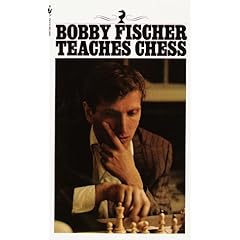
back when i thought i had a future in this sport. to this day, i have a... tendresse, you could say, for crazy old chessmen. their obsession and madness i will forgive. one of my most favorite nabokov novels is the defense, for obvious reasons.
used to have one just like this:
back when i thought i had a future in this sport. to this day, i have a... tendresse, you could say, for crazy old chessmen. their obsession and madness i will forgive. one of my most favorite nabokov novels is the defense, for obvious reasons.
Tuesday, January 15, 2008
BOOK the 9th of February!
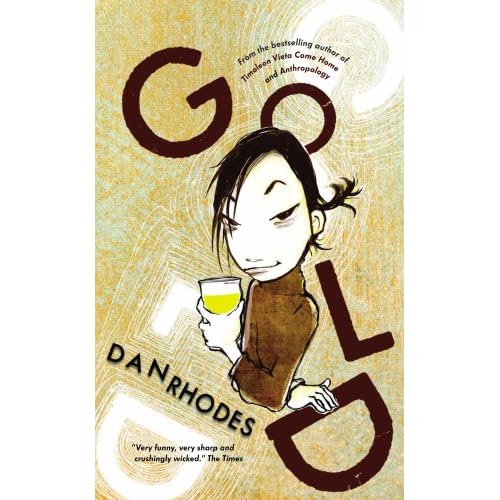
at 4pm, Fully Booked, Bonifacio High Street, Metro Manila, Dan Rhodes will be kicking off his 2008 tour with his first ever reading in The Philippines. Make sure you don’t miss this historic event. At the time of writing we are unable to confirm the rumour that if this reading goes well Rhodes will start thinking seriously about running for president.
Also, his latest book Gold is still available at all major bookstores. For more on it, please click on this link: http://www.danrhodes.co.uk/gold.html
Dan Rhodes in person.
Dan Rhodes is the author of five books:
Anthropology (2000)
Don’t Tell Me The Truth About Love (2001)
Timoleon Vieta Come Home (2003)
The Little White Car (2004 – writing as Danuta de Rhodes)
Gold (2007)
Here are some illustrious honours he has received:
Anthropology was shortlisted for the Macmillan Silver Pen award, losing out at the final hurdle to The Hill Bachelors by William Trevor. If you’re going to lose a short story competition to anyone, it might as well be William Trevor. At a break in proceedings, Rhodes had a dramatic tussle over a bottle of wine with someone he later found out was Harold Pinter.
Timoleon Vieta Come Home won the QPB New Voices Award in 2004. This was Rhodes’ first prize, and although he was mildly disappointed that he could no longer refer to himself as an award-losing author, he was, on balance, delighted to have won. He celebrated by going on the water dodgems at Coney Island, fatally damaging his brand new watch in the process. He had thrown away the receipt.
Timoleon Vieta Come Home also won the Authors’ Club First Novel Award in 2004. Prior to the ceremony Rhodes had been living the writer’s life and hadn’t been home for a few weeks, so he hadn’t read the formal invitation. Consequently he turned up dressed in his idea of smart clothing (i.e. not at all smart) while all the other men were dressed in tuxes.
Timoleon Vieta Come Home was also shortlisted for the Prince Maurice Prize and the John Llewellyn Rhys Prize. It was included in Barnes and Noble’s Discover New Writers programme, for which Rhodes was presented with a Mont Blanc pen. He swiftly lost the cap, thereby rendering it useless.
Rhodes was also included in the London Evening Standard’s 2003 list of People Who Make London Swing. This is particularly impressive as Rhodes has never lived in London. And nor is he, as stated in the piece, the "son of a Devon bricklayer".
****
It should be noted that a recent Gallup poll revealed that there are an estimated 14,000 writers worldwide who share Rhodes’ name. He is not to be confused with the Daniel Rhodes who writes books about vampires, or the Daniel Rhodes who writes books about ceramics, or the Dan Rhodes who writes books about theology, or the Danny Rhodes who writes teenage fiction, or the character Sheriff Dan Rhodes in Bill Crider’s Western detective series, or any of the many other Dan/Daniel/Danny Rhodeses out there in bookland.
He is, however, to be confused with the beautiful Danuta de Rhodes.
He lives in Scotland, and looks like this:

All of these, and More earth-shattering facts from http://www.danrhodes.co.uk/
***
More importantly for me though, Dan's coming home with dear Emmily! And their son, Arthur William, aka Arturito Burrito (the last time I checked. I was told that he is known by many other names).
Happy times.
Also, his latest book Gold is still available at all major bookstores. For more on it, please click on this link: http://www.danrhodes.co.uk/gold.html
Dan Rhodes in person.
Dan Rhodes is the author of five books:
Anthropology (2000)
Don’t Tell Me The Truth About Love (2001)
Timoleon Vieta Come Home (2003)
The Little White Car (2004 – writing as Danuta de Rhodes)
Gold (2007)
Here are some illustrious honours he has received:
Anthropology was shortlisted for the Macmillan Silver Pen award, losing out at the final hurdle to The Hill Bachelors by William Trevor. If you’re going to lose a short story competition to anyone, it might as well be William Trevor. At a break in proceedings, Rhodes had a dramatic tussle over a bottle of wine with someone he later found out was Harold Pinter.
Timoleon Vieta Come Home won the QPB New Voices Award in 2004. This was Rhodes’ first prize, and although he was mildly disappointed that he could no longer refer to himself as an award-losing author, he was, on balance, delighted to have won. He celebrated by going on the water dodgems at Coney Island, fatally damaging his brand new watch in the process. He had thrown away the receipt.
Timoleon Vieta Come Home also won the Authors’ Club First Novel Award in 2004. Prior to the ceremony Rhodes had been living the writer’s life and hadn’t been home for a few weeks, so he hadn’t read the formal invitation. Consequently he turned up dressed in his idea of smart clothing (i.e. not at all smart) while all the other men were dressed in tuxes.
Timoleon Vieta Come Home was also shortlisted for the Prince Maurice Prize and the John Llewellyn Rhys Prize. It was included in Barnes and Noble’s Discover New Writers programme, for which Rhodes was presented with a Mont Blanc pen. He swiftly lost the cap, thereby rendering it useless.
Rhodes was also included in the London Evening Standard’s 2003 list of People Who Make London Swing. This is particularly impressive as Rhodes has never lived in London. And nor is he, as stated in the piece, the "son of a Devon bricklayer".
****
It should be noted that a recent Gallup poll revealed that there are an estimated 14,000 writers worldwide who share Rhodes’ name. He is not to be confused with the Daniel Rhodes who writes books about vampires, or the Daniel Rhodes who writes books about ceramics, or the Dan Rhodes who writes books about theology, or the Danny Rhodes who writes teenage fiction, or the character Sheriff Dan Rhodes in Bill Crider’s Western detective series, or any of the many other Dan/Daniel/Danny Rhodeses out there in bookland.
He is, however, to be confused with the beautiful Danuta de Rhodes.
He lives in Scotland, and looks like this:
All of these, and More earth-shattering facts from http://www.danrhodes.co.uk/
***
More importantly for me though, Dan's coming home with dear Emmily! And their son, Arthur William, aka Arturito Burrito (the last time I checked. I was told that he is known by many other names).
Happy times.
Sunday, January 13, 2008
thank god for funny
bloggers with the strangest preoccupations.
gives me reason to update this otherwise dormant site. just came across a couple of posts taking issue with something someone, a poet/event-organizer, i think, said about some unfavorable comment on the poetry event he organizes. that’s not the funny part. the funny part is how the “critics” took arms, with cries of down! down, with martial rule! screw the establishment! no to censorship! never again to dictatorship! oh my god. i mean, come on! there has got to be a major illogical gap here somewhere. must be the premise? first of all, when and where will you ever encounter a writer who will appreciate criticism, much less ask for it? not even in the most futuristic and speculative of fictions will it ever happen that a writer will say, please, please dear critic, criticize me, say bad things about me and my friends’ works, it would be a huge favor, that is exactly the kind of thing i need to improve my craft, to make me socially responsible, gender-sensitive, etc. secondly, if we readers/critics think the writer should be open to criticism, then shouldn’t critics also be beyond the writers’ responses to the criticism? because that is not our domain, as our friend pierre m. would say. the domain of the critic is the production of meaning; of positive knowledge (or connaissance) about the limits (or the unconscious) of a text; or an understanding of the conditions that result to the possibilities of a literary activity. my personal take on this? go for it, go for each other, guys! amuse me, please!
gives me reason to update this otherwise dormant site. just came across a couple of posts taking issue with something someone, a poet/event-organizer, i think, said about some unfavorable comment on the poetry event he organizes. that’s not the funny part. the funny part is how the “critics” took arms, with cries of down! down, with martial rule! screw the establishment! no to censorship! never again to dictatorship! oh my god. i mean, come on! there has got to be a major illogical gap here somewhere. must be the premise? first of all, when and where will you ever encounter a writer who will appreciate criticism, much less ask for it? not even in the most futuristic and speculative of fictions will it ever happen that a writer will say, please, please dear critic, criticize me, say bad things about me and my friends’ works, it would be a huge favor, that is exactly the kind of thing i need to improve my craft, to make me socially responsible, gender-sensitive, etc. secondly, if we readers/critics think the writer should be open to criticism, then shouldn’t critics also be beyond the writers’ responses to the criticism? because that is not our domain, as our friend pierre m. would say. the domain of the critic is the production of meaning; of positive knowledge (or connaissance) about the limits (or the unconscious) of a text; or an understanding of the conditions that result to the possibilities of a literary activity. my personal take on this? go for it, go for each other, guys! amuse me, please!
Wednesday, January 02, 2008
She woke up with a start
to strange kitten sounds. Opening the window, she saw the culprit: Father cat, yawning at the foot of the stairs, gray and soft like the afternoon, unmindful of the kitties just behind him, hanging from a slab by their tiny paws. She balked at the cool, uncaring pose of mean Daddy cat. And where is the mom?
Living alone, she has not cried in years. And now this.
This family of cats, the ease of their coming into existence just like that; she curses the consequence of feline feelings: untutored hunger, wild warmth, madcap purring even in pain.
Living alone, she has not cried in years. And now this.
This family of cats, the ease of their coming into existence just like that; she curses the consequence of feline feelings: untutored hunger, wild warmth, madcap purring even in pain.
Thursday, December 13, 2007
proposal went stale
that's why i had to go through another oral proposal defense just this afternoon. it went really well. learned a lot. things seem even clearer now. i just love the no-fuss, direct-to-the-point approach my adviser takes with me. without my knowing it, i am pulling strung words out of my mouth and sounding like i had been munching on them for a really long time already.
Friday, December 07, 2007
the break
that will not come because it is longed for and dreaded at the same time.
there. i think i have finally named it. the simplest version of which is: rushing home after class, for some alone time, because you do not want to get too sick of this place you work in, of these people you do love being with, only to realize that you cannot stand being alone with your thoughts either. you end up remembering too many things, things you should have done, used to want to do, had resolved to try to do. and right after that, what follows is a veritable guilt trip: what do all those things matter when, what's at the very base, at the very core has been unhinged? for good. your friend calls this place of absence the soul. you sometimes find yourself agreeing that it is, indeed. but then, oh, what petty, burgis concepts these are, you think. but you swallow, you choke on the truth at night, knowing that tomorrow is going to be no different from the day that just passed. that this "free time" is actually the most debilitating of forces. free, really, is just false. doesn't exist.
***
been thinking about what L said last night, about having lost the language for that which you want to write about. i think i know what he means. i told him this afternoon that it must be why i have been wanting to run away from what i think, and what i inevitably have to say. i want to listen. i want to watch. i want to read.
***
some five years ago i found myself working on what, in hindsight, i now realize to be a futile, even complicit task that involved farmers who were once agrarian reform beneficiaries (ARBs) but who had since lost those benefits through -- what i understand now to be -- technical manipulations of the very system that was supposed to have protected them. i got paid a really good sum for it.
three years before that, i did a series of stories on the women of quezon who had lost their farmer sons, brothers, husbands and fathers to intense militarization/terrorism in their area. i did not get paid a single cent for that series of stories, but, to this day, i find myself going back to that experience of the truest, purest pleasure, when i saw those stories in print. and without my name on them.
***
or, it can actually be made so much simpler: there are too many smiling faces in december, and it's freaking you out. a student in your freshman lit class died and you want to weep for his mother who had this loneliness about her that radiated, it was beautiful, and sick at the same time. you could see the cracks, and you could see how the cracks held her together. and how brokenness made sense in other people.
or simpler still: you miss your mother and, having to wake up, every single day, to her absence is terrifying it snuffs the air, the voice, all motions and emotions, out of you. there.
lacan would be proud.
Wednesday, October 17, 2007
the truth is, i haven't been
sleeping, in the real sense of the word. in the sense i used to know of, and took for granted, my entire life prior to twelve months ago.
was complaining about this to friends -- eric, joel, vincent, lourd -- who probably couldn't have cared less. and i don't blame them, as they have found their own remedies for the same ailment. i thought that by speaking of it, blogging of it, i'd be cured of it. or, at the very least, they'd hand me a piece of the magical remedy. malas. none available.
they get it, don't get me wrong. husband weng gets it. (check his most recent blog post: reboot). but it's one of those things that we'd rather not talk about while enjoying real cold bottles of the cheapest beer in town, in a place which calls to mind a middle eastern romance (it's just along anonas road).
***
i just want to sleep. is all.
Monday, October 08, 2007
how we hung on to the great promise of the word
made flesh.
and of this: "Only say the word, and I shall be healed."
how we compusively rolled and unrolled the outright promise in this line, like a carpet to cover unsightly fears, to hide the ugliest truth.
how we fidgeted in guilt and anxiety: did we say the right words? did we say them right? did we say them often enough? did we manage to say anything at all? didn't she herself whisper it, wrap it in her sighs, in the painful intakes of her breath?
oh, words.
cursed them, swore them off. and yet, and yet. the paradox of it all. can't curse them without using them, can't swear them off without cowering in their presence.
the word made flesh, indeed.
(reply to larry's post: Whatever it is you want)
Saturday, September 15, 2007
this is what happens when you lock yourself in
your tiny apartment, for an entire saturday, ignoring the beautiful windy afternoon, friends' invitations to dinner and drinks, wifely chores and teacherly obligations; as a way to celebrate and recall a mother's birthday and a daughter's short life: you realize that there are limits, that roles you value are contingent upon many things. you also realize that there is a sunday after saturday, that you can hold a conventional celebration with unconventional family and friends. and that stories are stories, and life is life.
***
thanks to ma'am jing, for helping edit this little piece. it's coming out in an anthology of modern tales.
The Other Daughter
It took years before it dawned on Anna that she was her mother’s creation. Creation as in brought into existence, manufactured from raw materials; a result of her mother’s systematic thought. No, not at all a figment of the imagination. A product. A being. A whole. Anna was named after her mother’s favorite sister, Aniana. She was created one stormy night, when her mother turned twenty-nine, eager for a daughter after having given birth to two boys. Upon learning this, Anna also instantly understood that she would only live up to the age of twenty-nine, a belief which her mother had laughed off, saying that Anna would live as long as there was life in her creator.
You see, Anna was the character in the stories Aurora wrote for the children. Anna was “The pretty little girl who loved to read books as much as she loved to play with her toys, the one who took naps at two in the afternoon after an episode of Sesame Street, who finished her vegetables before she asked for her candy, who fed and washed her pets once daily, who watered the plants morning and afternoon, who made her own bed, and said her nightly and morning prayers.” She was also “The poor little girl on whose head a colony of lice grew and overtook her entire body, because she played out in the sun all day and she refused to have her hair washed, combed and tied in a tight pony tail, so that she had to beg her fairy godmother to wave the colony of lice away with a wand, promising to never miss a day’s bath, to play out in the sun only when her mother allows her to.” Anna knew she was all those. When she and her siblings were young, her mother would read out loud to them from her little blue notebooks every night. Her mother would glance and wink at Anna at the start of every story. As soon as the soft, hollow voice would begin with “There was once a little girl…” a warm feeling would suffuse Anna’s entire body, and she would snuggle under her mother’s soft, smooth arm. Her mother would then secretly rub the top of Anna’s head with little sweeps of her chin, especially during the most engaging parts of the stories.
Anna was all those characters, yes. But she was also, quite specifically and concretely, the third child of five, with two boys before her and two girls after. Anna, therefore, was the one who got to braid her mother’s long, brown hair before her mother left for work. She got to assist her mother in the kitchen in the peeling and grounding of peanuts for the cookies, and in the mashing of potatoes, cream and butter in the aluminum tub. Anna was a character and a middle child, and she immensely enjoyed the privileges that went with that.
It was also because Anna was the middle child that, of all the children, she was the only one who was sent, perhaps as an experiment, to public school. There she was largely unseen. At first, Anna thought, it was not so much that they did not see her; it was only that they would rather ignore and tolerate her because Aurora, her mother, had been one of the most popular teachers in the same school. But after being part of, and remaining inconsequential in, several group games of patintero, water-water-go, and base-base, Anna seriously got to thinking. The confirmation came after a game of hide-and-seek when Anna realized no one had bothered to “seek” her. She had stood for hours, literally “hiding” in plain sight, her fat butt jutting out from behind a palm trunk, not noticing that it was already late in the afternoon, that the school grounds were empty, that the game had long ended. Anna became truly convinced that she was, in fact, unseen and unheard.
She continued to attend school anyway, even if no one saw her raising her hand to volunteer for an activity, even if no one heard her giving the correct answers to the most difficult questions. She eventually found the courage to ask her mother that she be allowed to continue attending school even when her mother had already left teaching. Anna’s mother had moved on to become first, a cashier in the government bank, then its first female Manager. After a few more years, she left the bank again to become the city’s first lawyer for women.
Unfortunately, Anna had to stop attending school when her mother started taking all those trips, giving all those talks, comforting all those women in all those different far places. Anna had to be by Aurora’s side, or close to her, in order to exist. Far from her mother and her mother’s mind, Anna got lost and ceased to be.
Anna learned her lesson when her mother went on a US trip with the husband. Anna refused to join them. She was enjoying her reading and her classes. School was much too important and fun then, as they were doing “Little Women” in English, “Mariang Makiling” in Filipino, geometric shapes in Math, and baking in Home Economics. Anna stood her ground: she did not want to go.
The morning that Anna’s mother left, Anna found that she could not locate herself either. She could not even leave the room to look for her mother because there were no room, no walls, and no boundaries, to mark the world she had been accustomed to. There were no voices, no air, no light. There was only a sensation of being let go, of being dropped, of disappearing into an abyss. It was the single most terrifying experience Anna ever had.
Anna later learned that on that trip, Aurora had been constantly nauseated and had fever and chills for three nights in sunny Santa Monica. The husband, a lawyer like her mother, there for a convention as well as a vacation, was much distressed over his wife’s condition. He was as devoted to Anna’s mother, as she was to him. Anna saw how they held hands in their sleep, and how, for all his position and power in court, he was almost as dependent on her mother as Anna was.
He was gentle-mannered, quiet, shorter by two inches than Aurora who was five feet and eight inches. He made up for his lack of height, with sharp aristocratic features and a quiet authoritative demeanor. And he was a loving, though at times distant, father to his children. Anna liked her mother’s husband very much, but could not love him, because she simply was not capable – it was not in her system. She loved her siblings because she shared their blood; there was, within her, a mechanism for that love. However, she could not get herself to call him, could not even conceive of him as, father. Simply because there was nothing of him in her. Anna was solely her mother’s creation. Anna knew, and didn’t mind, that he had absolutely no awareness of her existence.
But since that sorry, discombobulating episode, Anna never strayed far from her mother’s side again. That meant leaving school altogether, to be her mother’s personal assistant. School, by then, did not matter much anymore. Anna managed by doing her own reading, when she wasn’t helping her mother in her cases, speeches, and studies, that is. She didn’t mind working with her mother. To Anna, those were perfect moments. And the sense of being whole and complete in her mother’s presence was such that Anna would often forget she was a self at all.
There were, however, a couple of times when Anna felt like going her own way, living her own life. Anna once dreamed of becoming the writer her mother had stopped being. In her own time, at home, Anna wrote stories endlessly, some of which her mother submitted for publication. One piece came out as a children’s book with her brother’s illustrations, under her mother’s name.
Anna also constantly dreamed of singing, of being heard, of sharing her voice, which was exactly like her mom’s—low, full, somber at times times; teasing and joyful at others. Anna had no qualms, no false modesty, when it came to her singing. Often, while at work, riffling through documents, arranging files, stapling together pleadings and appeals, her mother would start to sing, and Anna would join her, their voices rising in an uncanny unison—always on the exact same notes, but from different pitches, and exactly an octave apart. Her mother jokingly told her, one morning, over breakfast, that they should both pursue a career in singing. And they both laughed over the absurdity of this idea. But Anna knew, as her mother also did, that there was an undercurrent of something akin to pain, whenever she sang, knowing that her voice would never be heard by anyone else. It was through Anna’s singing, one day, that her mother suspected that Anna had fallen in love.
Aurora was right. Anna had fallen in love. The mechanism for love that was built inside Anna was set in motion in a way both strange and yet familiar. It was as though there were a part of the man she loved inside her. He was working as part of her mother’s staff, while trying to finish law school. Anna loved the way that the presence of the calm, reserved, young man, seemed to stabilize her mother. Anna even suspected that a big part of her being in love was influenced by this effect he had on her mother. He was, in turn, dedicated to Aurora; sometimes much too dedicated to her. Like most everyone her mother worked with, he was inspired to please her, to measure up to standards he wasn’t even sure existed. There was something in her mother that directed people’s behavior towards her; she was a subtle but powerful force. It was not only her beauty, it was her certitude; a certitude devoid of condescension. What Anna loved about him was that he was not fazed at all by this force that was her mother. He was not indifferent to it, he thrived in it.
He was lean and willowy; androgynous, even effeminate at times. He had long fingers that looked like they were trained on old piano keys, or had spent much time plucking and strumming nylon guitar strings. Oh how Anna had wanted so much to feel him and to be felt by him. Several afternoons and many dawns did Anna spend trying to summon all that she had and all that she was, in order to make a dent in his consciousness, to exist even as a mere whiff in the air he was breathing. But, to no avail. This broke her mother’s heart, too, Anna knew. The man eventually left her mother’s organization, married some nice young girl, moved to New York to pursue a career in immigration law. And he was slowly, eventually filed away, forgotten like an old, passionately argued, but hopelessly lost case.
Anna was able to return to the soothing rhythm of living with her mother. This was only disrupted when her brothers and sisters, one by one, left home to pursue their own lives. Anna suffered most, because she also suffered with and for both Aurora and Aurora’s husband. Much as Anna desired, she could never make up for the sense of emptiness the leaving of the children created in the couple.
Anna was with Aurora and her husband in Dr. Villegas’s clinic when, after a series of annual routine tests, it was confirmed that her mother who had just turned fifty the day before, suffered from an advanced stage of breast cancer. Upon hearing the news, her mother’s heart closed up, the act resulting in an instant quieting in the room. So drastic was the shutdown that Anna heard it very distinctly. In the heavy silence, she ran to embrace Aurora’s stiff body. At the same time, she wanted so much to reach out to Aurora’s husband, to help stop what she knew was the wild swinging of the pendulum crashing against the walls of his heart. She could see it in the lividness of his lined face, even as he himself tried to seem cool, struggled to clear his mind, to make sense of what he just heard. It was only much later, when they got home, that Anna allowed herself the kicking and screaming, the absolute childish resistance, the total lack of restraint, that she had been tempted to give in to while at the hospital.
Soon after, Aurora’s children came home—left their jobs, relationships, schools—to be with their mother, and Anna was glad that they were a family again. Her siblings had become different persons. They had been brought up on love, and had much of it to give. Their presence in the house hastened Aurora’s recovery. Her mother survived the first cycle of chemotherapy. When she was tested again, she was declared clear of cancer cells.
Everyone then insisted that her mother quit her job, give up her fights, learn to relax. Anna, however, understood her mother’s apprehensions about living a purely domestic life. She was convinced her mother should be allowed to live her life the way her mother saw fit. And despite the abatement of the scare over her mother’s health, Anna’s conviction about her own life ending at the age of twenty-nine was starting to influence her actions, decisions, and even dreams.
In the years that followed, everyone resumed his or her life, albeit with some adjustments. Debts had been incurred, some properties had to be sold, in the course of their mother’s treatment. This put a lot of pressure on the husband and wife who had reputations and public images to keep up. Both spent more and more time at work than at home. The fights her mother engaged in became bigger, the stakes became higher. Anna suffered from her mother’s involvement in these legal battles. The less Aurora thought of her, the more difficult the struggle was for Anna to exist unseen and unheard. As Anna neared the age of twenty-nine her dreams also became more strange, more terrifying. Because she knew they were real. They were going to prove themselves real.
On her own, Anna started to grieve even before the deaths and losses occurred. She tried to get used to the idea of the approaching tragedies by writing about them. Her heart bled as she wrote of the confusion and panic. And as she wrote, she herself had to struggle to breathe under the threatening cloud her characters could not escape. The thought of the family breaking apart, of losing someone, haunted the family, underlining their normal conversations, the last few meals they took together in the hospital room, the laughter they shared over some TV sitcom, the last hugs, and nonchalant caresses. After writing the story in her mother’s blue notebook, Anna braced herself for the worst.
Exactly eight years after her mother was declared a survivor of the disease, a growth the size of an orange was found in her mother’s upper left lung, along with several others in her vital organs. The cancer cells ravaged her body and her senses fast, but could not break her composure. Aurora managed to hide her pain most of the time—she kept her back straight, sat cross-legged, even if someone had to help her lift one leg so it could be crossed over the other. It was because her mother was very good at hiding her pain that everyone started believing in miracles instead of the doctors’ prognosis. The doctors would try to tell them that the mother might not have long to live, but the kids would just say, yeah, yeah, so? They have seen their mother bounce back from the worst bouts. They knew her better than anyone else did.
Anna’s dream of a few years before started to play itself out. By the time they celebrated her mother’s her fifty-eighth birthday in the hospital, everything was a potential source of pain—the littlest chink of light, the merest sound, the slightest evidence of smell.
One September night at the hospital, with everyone in attendance for dinner, a strong typhoon struck the city, rendering it pitch black, and keeping everyone stranded in the hospital room. Extra beds had to be wheeled in, pushed right next to Aurora’s own bed. Despite the strong typhoon tearing the city to pieces, the family found something gay in the occasion. It brought back memories of home, years ago, when they were all young, and they would gather round their mother for one of her stories. They recalled some of Aurora’s stories, and, hearing them, Anna’s body was suffused with warmth again.
The situation lifted everybody’s spirit, emboldened them not only to recall the past, but to look forward. Christmas plans were tossed around in the dark room, even ridiculous ones, like the father’s suggestion that they celebrate the holiday during the entire months of November and December. Laughter rang out. Anna clutched at her mother’s left arm the entire night, even as she joined in the laughter and gaiety, trying to ignore the rapid beating of her own and her mother’s heart.
After the laughter and bantering had died down, and only Aurora’s labored breathing was audible, Anna could not sleep. She was certain now that they were going to lose their mother that very night. Knowing that it was going to happen very soon made the knowledge new again to Anna: she was literally nothing without Aurora. This woman was her creator, her God, her Self.
Those were Anna’s last thoughts before she somehow fell asleep.
In the morning, the storm died down to a light drizzle, rendering the scene outside in a milky haze. The room itself was bathed in soft gray. Everyone was still in deep sleep. Anna woke up and glanced over to her mother lying on her side, her right arm still entwined with her husband’s. Anna knew it was up to her now. Anna was, after all, Aurora’s character, and specifically the middle child. Anna was as good at this, as her mother made her out to be. She closed her eyes and recalled her dream.
Aurora is starting to stir. There is a calm, knowing smile on her face, even if there are still traces of sadness in her eyes. She stands on the bed, finally able to extend her limbs after several months. She bends over to kiss her husband, and then each of her children. She then carefully steps over their sleeping bodies to reach for a hairbrush, which she briskly runs over her hair. Then, she pulls open the drawer of the side table, to search inside for her wedding ring and her sunglasses.
It is while her mother is in the act of putting on her sunglasses and testing the strength of her legs, flexing her feet, that Anna awakens fully. At first she does not comprehend the scene before her eyes. She sees her mother carefully but confidently padding her way to the windows, drawing the curtains to the side, sliding the glass panes open, and stepping on to the sill, standing still to breathe in the cool breeze.
Anna scrambles to her feet. She barely has time to smooth her own hair, put on shoes, before Aurora motions for Anna to join her at the window.
In a while, her mother’s attending nurse comes into the room, walks over to where her mother’s body is, still wrapped in her husband’s embrace. From the window Anna and her mother look on worriedly, helplessly, as the nurse taps the man on the shoulder lightly. The others stir and awaken with the vague sensation of last night’s gaiety and laughter still clinging to their senses...
Anna opened her eyes, took one last breath, and braced for flight, as she heard the doorknob being turned, softly announcing the imminent entrance of her mother’s attending nurse.
And so it was that at the age of twenty-nine, at exactly half her mother’s age, at exactly the same age her mother was when Anna was created, the unseen and unheard life of Anna, Aurora’s character and middle child—the other daughter—ceased to be.
QC/Sept. 01-02, 2007
Subscribe to:
Posts (Atom)
